
 Richard Hall
England’s ADHD and autism services are not merely struggling with demand. They are often organised in ways that force people already seeking help to chase answers, challenge decisions and reconstruct their own route to care.
Complaints have surged
On 25 August 2026, the Parliamentary and Health Service Ombudsman reported a 206% rise in ADHD and autism complaints over five years, from 410 in 2021–22 to 1,257.
Its report examined 3,000 complaints and found recurring problems with lengthy waits, unclear rights to choose a provider, inconsistent recognition of diagnoses and access determined too heavily by postcode.
Paula Sussex, the Health Ombudsman, said services were “too complex and inconsistent”, leaving patients “falling through the gaps”. That’s not simply a ‘queueing problem’, is it? It’s a system-design failure.
When people are forced to discover their own legal rights, locate alternative providers and repeatedly correct professionals, the service has transferred its administrative burden onto those least well placed to carry it.
The referral that led nowhere
One Ombudsman investigation concerned Rich, a 48-year-old student who asked to use his legal Right to Choose an NHS-funded ADHD provider. South East London ICB refused the request.
Instead, it referred him to a local ADHD service which had not opened and had no opening date. His NHS treatment was delayed by five months as a result.
Rich eventually paid almost £4,000 for private care. He said the process was “completely overwhelming”, particularly for a person with ADHD trying to navigate needless complexity and contradictory information.
He had researched the rules, challenged inaccurate advice and supplied relevant contact details to his GP. None of that secured the care he was entitled to receive through the NHS.
People are disappearing from waiting lists
In a separate case, South London and Maudsley NHS Foundation Trust removed a woman from an ADHD medication-titration waiting list without warning or valid reason.
She was left without specialist monitoring support for around six months. The Ombudsman found the delay may have affected her symptoms and her ability to carry out ordinary daily activities.
This is not just a missed target. It is a follow-up failure: no warning, no clear explanation, no named person taking ownership and no reliable route back.
Patients are repeatedly told that waiting lists are unavoidable. But silently removing somebody from a list is not an unavoidable product of demand. It is a preventable communication failure.
The scale of the unanswered need
NHS England’s May 2026 ADHD management information estimated that up to 803,658 people in England had open referrals which may have been for an ADHD assessment.
That figure included 626,415 referrals recorded in mental-health-service data and up to 177,243 recorded through community-health reporting. New mental-health referrals had risen 29.5% in one year.
The government’s interim review, updated on 10 June 2026, said children and young people awaiting ADHD assessment rose from around 21,000 in April 2019 to around 270,000 by December 2025.
Its careful conclusion matters. Referrals, diagnoses and service demand have grown sharply, while population estimates of underlying ADHD prevalence appear more stable. Those facts can coexist without invalidating patients’ needs.
A postcode lottery cannot be called a service
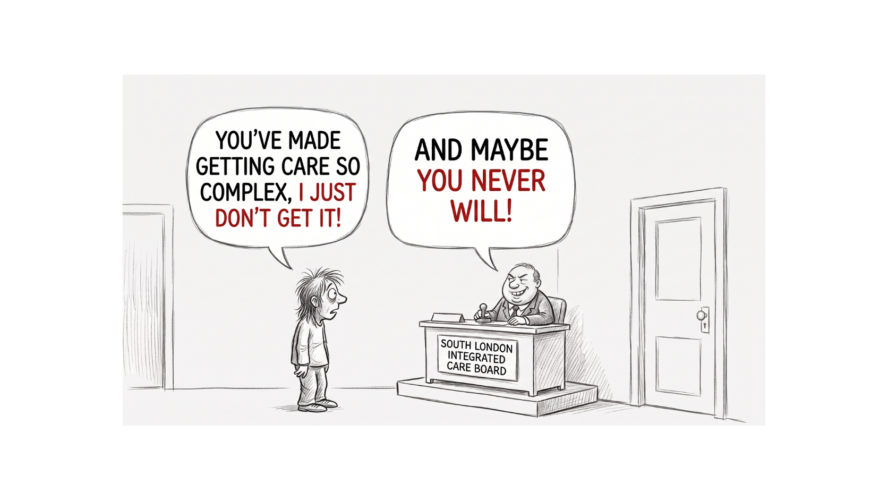
The Ombudsman says people should not have to “fight their way through a confusing system” for ADHD and autism care. Yet fighting is what the current model often requires.
Access can depend on local commissioning decisions, whether choice rights are understood, whether providers offer treatment after assessment, and whether anyone actually explains the next step.
The Ombudsman has called for national guidance, stronger support for Integrated Care Boards and better regulation of NHS-funded assessment providers that may currently operate without routine inspection or monitoring.
That is necessary, but the practical test should be simpler. When somebody asks for help, do they receive a clear answer, a named route forward and meaningful follow-up?
Too often, the answer is a referral into uncertainty, followed by months or years of chasing a system that was meant to support them.
Sources for ADHD and autism patients are being put through a system built to overwhelm them
1. Parliamentary and Health Service Ombudsman , 25 August 2026
In this article: Supports the opening findings on the rise in complaints, fragmented care, patient-choice failures, postcode variation, Rich’s delayed treatment and private costs, and the woman removed from medication-titration support.
Source passages: The Ombudsman reports an “almost 206% rise in complaints” over five years, from 410 to 1,257. It says its report draws on 3,000 complaints and identifies “lengthy waits for assessment and treatment”, uncertainty about patient choice, and inconsistent recognition of diagnoses. It records Rich’s five-month delay, almost £4,000 private cost, and a separate six-month loss of monitoring after removal from a titration waiting list.
Where to find the source passages: On the webpage, read the opening summary bullets and the paragraphs beginning “In its new report”, “In one investigation” and “In another investigation”. The linked report, Improving ADHD and autism services: commissioning with confidence, contains the wider complaint analysis and recommendations.
2. NHS England , ADHD Management Information , May 2026
https://digital.nhs.uk/data-and-information/publications/statistical/mi-adhd/may-2026
In this article: Supports the section “The scale of the unanswered need”, including the estimate of up to 803,658 open referrals and the 29.5% annual increase in new referrals.
Source passages: The publication says that in March 2026 there were “up to 803,658 open referrals that may be for an ADHD assessment”. It divides these between 626,415 referrals in the Mental Health Services Dataset and up to 177,243 in community-health reporting. It also records up to 32,375 new mental-health referrals, a 29.5% increase from March 2025.
Where to find the source passages: Go to the webpage’s Summary section, then read the subsection headed Key Facts, especially Referrals for an ADHD assessment and New referrals for an ADHD assessment.
3. Department of Health and Social Care, Independent review interim report , 10 June 2026
In this article: Supports the comparison between rapidly rising referral demand and more stable population-prevalence estimates, and the rise from about 21,000 to 270,000 children and young people awaiting ADHD assessment.
Source passages: The review says the number of children and young people waiting for an ADHD assessment rose “from around 21,000 in April 2019 to around 270,000 by December 2025”. It also says the available population surveys suggest underlying ADHD symptoms have been “far more stable”, while diagnosis, referral and service demand have increased.
Where to find the source passages: Read section 7. ADHD trends and service demand, particularly the paragraphs beginning “Referrals, waiting lists for assessment” and “At the same time, the best available population surveys”.

Footnote Zone for ADHD and autism patients are being put through a system built to overwhelm them
Disclosure: The diagnostic tools referenced below were developed by NokNok, a specialist in online responsiveness tool design.
This Footnote Zone uses NokNok’s diagnostic toolkit to examine how confusing pathways, poor follow-up and unowned patient contact can be identified, measured and addressed in ADHD and autism services.
- Email Finder: ADHD and autism patients can be forced through web forms, generic helplines and unclear referral routes while direct departmental contact options are obscured or unavailable. Email Finder scans an organisation’s website and related public-facing materials for published email addresses, then reports missing routes, conflicting contact details and structural contactability gaps.
- Reply Radar: The article shows patients facing long waits, unanswered uncertainty and delays after referrals, including care delayed when a local service had not even opened. Reply Radar deploys targeted test emails and quantitatively measures reply rates, latency, response consistency and responsiveness benchmarks across patient-facing contact channels.
- Compliance Sniffer: Incorrect advice about Right to Choose, unclear explanations and failure to notify someone removed from a waiting list demonstrate communication that can be both inadequate and harmful. Compliance Sniffer analyses incoming responses for objective quality, clarity, relevance, escalation and compliance benchmarks.
- Mystery Shopper: The article identifies end-to-end breakdowns between referral, assessment, treatment, monitoring and re-entry after an administrative failure. Mystery Shopper executes a comprehensive responsiveness UX audit, testing how a real user experiences contact, response and escalation pathways from first enquiry onwards.
Disclosure: The diagnostic tools referenced in this Footnote Zone were developed by NokNok, a specialist in online responsiveness tool design. ReplyResearch may use NokNok tools, resources, or analysis when preparing coverage, while retaining responsibility for its editorial decisions, including what topics to cover, what sources to cite, and how stories are presented. Read the full ReplyResearch Collaborative Disclosure Policy [insert the published policy URL here].
I could not locate a live ReplyResearch Collaborative Disclosure Policy page, so I have left that final link as a clear insertion point rather than inventing a URL.